The Foreign Account Tax Compliance Act (FATCA): What It Is and How It Affects Expats
Posted on 23-03-2023 03:09 PM
While talking with Derren Joseph from htj.tax I realized that there are many misconceptions about FACTA that I'd like to address in this article.
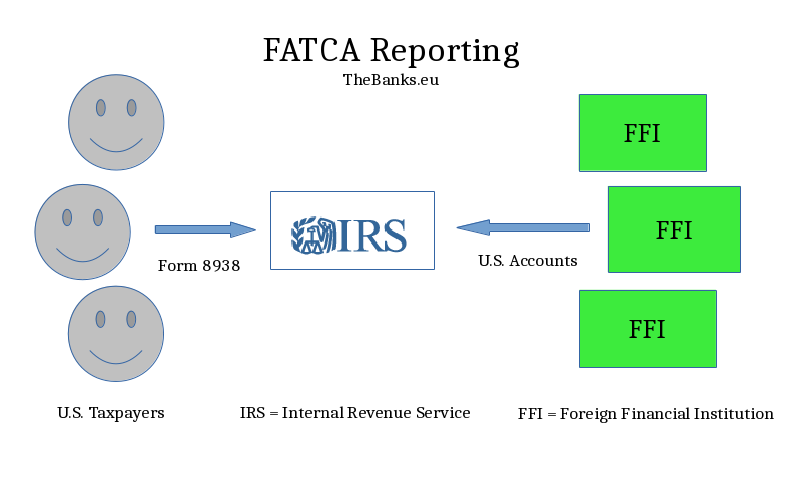
The Foreign Account Tax Compliance Act, or FATCA, was passed by Congress to help crack down on tax evasion. It requires foreign financial institutions (FFIs) to report information about US citizens with accounts and the value of their assets to the IRS or through FATCA agreements signed with individual countries.
What is FATCA?
The Foreign Account Tax Compliance Act (FATCA) is a US federal law that requires financial institutions worldwide to share information about the assets and interests held by US citizens. It was enacted in 2010 and has become an important tool for combatting international tax evasion.
FATCA is a complex law that involves many different aspects, including requiring U.S. citizens and green card holders who reside outside of the United States to report their non-US bank accounts to the Internal Revenue Service. It also imposes withholding and reporting requirements on certain foreign financial institutions.
A number of financial institutions around the world have signed agreements with the IRS to comply with FATCA. These agreements include banks like Societe Generale, Credit Suisse, and HSBC.
Most notably, the agreement states that an FFI must identify U.S. citizens by “FATCA indicia.” This includes the presence of a US address, a US passport or green card, or other US identifying details. It is also required that a bank identify individuals in situations where they have signature authority over a foreign account.
Those who are unsure of whether they need to file a FATCA form should speak with an international tax attorney. They can help determine if an individual’s situation calls for filing, as well as explain how and why it is necessary to do so.
If a person’s situation does require filing, they can file a FATCA form called Form 8938. This form is used to report any foreign accounts that exceed a certain threshold (which differs for those living in the United States or abroad).
Another form, FBAR, is also required of many Americans who have a foreign bank account. This form is used to report the value of foreign bank accounts that exceed $10,000 at any time during the year.
For many, the requirement to file a FBAR or FATCA form is a major inconvenience and can be overwhelming. However, the IRS has a program to allow people who were unaware of their compliance obligations to catch up without incurring penalties.
FATCA is a controversial law that has been targeted by ardent opponents. Some have argued that it is unduly burdensome on expats and violates privacy protections, while others claim that the law brings in new revenue and is needed to combat international tax evasion. In the 115th Congress, representatives Rand Paul (R-KY) and Mark Meadows reintroduced legislation that would repeal FATCA in its entirety.
Who is FATCA aimed at?
The Foreign Account Tax Compliance Act (FATCA) was enacted in 2010 to combat the use of offshore accounts by US taxpayers. FATCA requires foreign banks to report information about their US clients' financial assets and investments directly to the IRS.
FATCA imposes penalties on those foreign financial institutions (FFIs) that fail to comply with the reporting requirements. In addition, FATCA encourages countries around the globe to enter into Intergovernmental Agreements (IGAs) with the U.S. These agreements remove domestic legal impediments to compliance and simplify the burdens on FFIs.
However, many Americans abroad have not been happy about the way that FATCA has impacted them and their finances. The IRS has been criticized for not doing enough to help these individuals understand how to meet the reporting obligations required under FATCA.
One of the reasons for the complaints is that FATCA does not take into account the fact that American expats are living in countries with high taxes. According to the IRS, "the goal of FATCA is not to discourage Americans from banking abroad but rather to ensure that they pay their fair share of the taxes on foreign income and assets."
The Treasury Department has attempted to address some of these concerns by releasing Notice 2023-11 in January 2018. The Notice does not change or amend the law in any way, nor does it give the impression that the IRS is willing to back off its enforcement of FATCA. The Notice does, however, set a reasonable goal for those who are out of compliance and is a clear signal that the issue is not going away anytime soon.
In addition to requiring FATCA reporting, the legislation also requires that foreign banks require American citizens to sign a Form W-9 and a waiver of confidentiality. These forms are designed to confirm that the account holder is a US citizen and that they agree to allow their information to be provided to the IRS.
Although this may sound like a lot of work for American citizens, it is really only a small amount of work. In addition, most banks have already started to prepare their systems and procedures to comply with the new laws.
How does FATCA work?
Many Americans living abroad are unaware of how the Foreign Account Tax Compliance Act (FATCA) works and how it affects them and their taxes. FATCA was enacted in 2010 to address the problem of Americans stashing large sums of money in non-US bank accounts without reporting them to the IRS.
FATCA requires foreign financial institutions (FIs) to report information about their clients’ accounts on a regular basis, with the goal of detecting and identifying U.S. citizens and U.S. persons for tax purposes. It also includes withholding requirements for FIs that fail to comply.
FIs that do not comply will have to pay a 30% withholding tax on any payments made from their US clients to them. Typically this will be interest, dividends, rents, royalties and other 'fixed and determinable income' from the United States.
While FATCA was originally aimed at catching Americans with overseas accounts, it is now a global movement against tax avoidance and has been used as a model for developing automatic data exchanges between fiscal authorities around the world. As a result, participating countries are required to sign intergovernmental agreements (IGAs) that incorporate FATCA into their local laws.
IGAs require FIs to identify and disclose the names, addresses, Social Security numbers and other information about US persons who open accounts with them. Moreover, all FIs must have a clear and simple process for verifying the identity of these individuals and contacting them if necessary.
The law also requires that a FI disclose to a local government any other information that it deems relevant to locating a US person or a U.S. person for tax purposes, such as a bank statement that shows the balance of the account. Depending on the country, this information may be sent to the local government or directly to the US Internal Revenue Service (IRS).
As a result of FATCA, many old reporting rules that had been unenforceable until now have suddenly become more serious and enforced. In addition, the penalties for failure to comply are draconian.
The impact of FATCA has radically changed the financial and tax environment for Americans abroad. The burden of complying with many old and new reporting requirements has dramatically increased, making it more critical than ever for Americans to be well-informed about these rules and the potential risk of non-compliance.
What are the penalties for non-compliance?
The Foreign Account Tax Compliance Act (FATCA) is an important step in the IRS’s ongoing efforts to combat tax evasion by Americans holding assets abroad. It requires certain financial institutions to report information on account holders who are US citizens or residents, and it requires U.S. taxpayers to disclose specified foreign financial assets on their annual tax returns.
While FATCA was enacted in 2010 as part of the Hiring Incentives to Restore Employment (HIRE) Act, it has only been effective since 2012. The new law has been a significant boost to the IRS’s efforts to combat offshore tax evasion.
In the past, the IRS has imposed a substantial number of penalties on individuals for failing to disclose foreign accounts and assets. However, FATCA has significantly increased the penalty amounts and the length of the statute of limitations for non-compliance with the law.
Despite this, there is an opportunity for taxpayers to minimize or avoid FATCA penalties through a voluntary disclosure program. These programs include the Offshore Voluntary Disclosure Program and Streamlined Filing Compliance Procedures.
CPAs and tax attorneys should take this opportunity to inform their clients of the new FATCA regime, as well as incorporate it into client letters, organizers and return preparation checklists and procedures. This is especially true for those clients who have existing accounts with foreign financial institutions.
Individuals who fail to comply with FATCA may face a variety of penalties, including:
The first penalty is the failure to report specified foreign financial assets on Form 8938. This penalty is $10,000 per year for each year that an individual fails to report a specified foreign financial asset, up to a maximum of six years.
This penalty is in addition to the usual FBAR penalties. The FBAR penalty is typically assessed based on the amount of the specified foreign financial asset in question.
For example, if an individual has a $100,000 asset in the Bahamas and fails to report it on Form 8938, they can be fined up to $25,000 per year for each year that they do not disclose it.